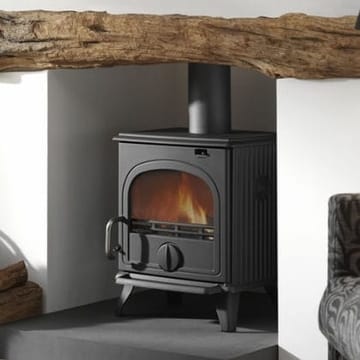

The Ultimate Guide to Solid Fuel & Multi-Fuel Stoves: Choosing, Buying, and Installing Your Perfect Fire
When was the last time you truly enjoyed the luxury of sitting in front of a glowing, crackling fire? There is something undeniably magical about the snug feeling of relaxing in your living room with a hot drink or a glass of wine, listening to the gentle hum of a warm fire in the background.
It is no surprise that stoves have seen a massive surge in popularity across the UK. Long sought after by style-conscious homeowners and rural property lovers alike, they are fast becoming the ultimate home focal point. Purchasing a stove used to mean resigning yourself to a basic wood-only box, but times have happily changed.
Here at Phoenix Fireplaces, as one of the largest independent fireplace and stove showrooms in Essex, we help families navigate this journey every single day. We have combined our decades of hands-on expertise into one comprehensive guide to help you choose, buy, and install the ideal solid fuel or multi-fuel stove for your home.
1. Multi-Fuel vs. Wood-Burning: Which Is Right For You?
Before falling in love with a particular design, you need to consider what you want to burn. Stoves generally fall into two categories: dedicated wood burners and multi-fuel stoves.
Multi-Fuel Stoves: Ultimate Choice and Flexibility
Multi-fuel stoves (sometimes called mineral-fuel stoves) give you the freedom to burn wood logs, smokeless coal, peat, or turf briquettes.
- How They Burn Differently: Coal requires an airflow from below to burn efficiently, which is why multi-fuel stoves feature a riddling plate and a grate to let ash drop down into an ash pan. Wood, on the other hand, burns best when resting on a bed of its own ash (a firebox) with air circulating from the top.
- The SIA Finding: According to the Stove Industry Alliance (SIA), roughly 77% of multi-fuel owners ultimately burn only wood. However, if you don't have a reliable, regular supply of seasoned timber and want the backup option of smokeless coal on freezing winter nights, a multi-fuel stove is a brilliant, versatile choice.
Dedicated Wood Burner & Pellet Stove
- Log Burners: Simpler in construction and perfectly optimised for wood logs. If you love the idea of sourcing or seasoning your own logs, a dedicated wood burner is exceptionally efficient.
- Wood Pellet Stoves: These use automated hoppers, electric ignitions, and compressed sawdust pellets. They are highly efficient and programmable, though they require electricity to run and demand more regular mechanical servicing.
- Multiply your room's height, width, and length (in metres).
- Divide that total volume by 14.
- This gives you a close estimation of the kilowatt output needed to reach a comfortable 21c when it is 1c outside.
- Smoke Control Areas: If you live in an urban or suburban district governed by local council smoke control rules, you must ensure your chosen appliance is Defra-exempt, or commit exclusively to burning approved smokeless fuels.
- Efficiency Ratings: UK building regulations require new heating appliances to meet strict minimum efficiency thresholds (typically 65% for standard stoves, rising to 80% - 90% for top-tier models). Modern features like Airwash Systems (which direct a curtain of air across the glass to keep it crystal clear) and Cleanburn technology make maintenance effortless.
- Do you have a chimney? If your home lacks an existing chimney, you can still have a stove fitted by running an insulated twin-walled stainless steel flue through an exterior wall or ceiling.
- Lining Older Chimneys: Older chimneys frequently require relining with a flexible stainless steel tube. This prevents dangerous gases from leaking through porous brickwork, stops dark tar stains from bleeding into your interior plaster, and ensures the flue draws smoke efficiently.
- Protecting Your Home: Your installer will lay protective sheeting across your room and seal off the fireplace opening to minimise soot migration. (Tip: Having your chimney swept a week prior makes this even cleaner!)
- Preparing the Hearth: Any combustible materials (such as wooden flooring or timber joists near the firebox) must be removed and replaced with a compliant non-combustible hearth of appropriate thickness and dimensions.
- Lining and Sealing: The flexible liner is lowered down the chimney stack, insulated (often with microfill poured between the liner and chimney wall), and sealed at the base with a register plate.
- Connecting and Testing: The stove is securely coupled to the flue adaptor. A rigorous smoke test is performed to verify correct draw, ensuring every trace of combustion gas exits safely out of the chimney top.
- Handover and Demonstration: Your installer will walk you through your new stove, explaining how the air controls work, how to build your first optimal fire, and how to empty the ash pan safely.
2. Choosing the Right Stove: Sizing, Output, and Regulations
Stoves range in price from £500 to well over £2,000 depending on wattage, brand, and design. To avoid buying a unit that is too small (leaving you cold) or too large (overheating your room and causing unburnt tar deposits), you need to calculate your precise heat output requirements.
Calculating Your Required Wattage (kW)
As a reliable rule of thumb for UK homes:
Example: A room measuring 5m times 4m times 2.5m = 50m³. Dividing 50 by 14 suggests a standard 5 kW stove will keep the space wonderfully warm.
Essential Considerations Before You Buy
3. Safety, Building Regulations, and Chimney Care
Installing a solid fuel appliance is not a DIY weekend project. Because heat, carbon monoxide, and combustion gases are involved, strict UK Building Regulations apply to hearth sizes, clearances from combustible materials, and chimney integrity.
The Competent Person Scheme (HETAS)
You cannot simply install a solid fuel stove yourself without navigating complex building control sign-offs. Using an installer registered with a Competent Person Scheme (such as HETAS) means the technician can self-certify their work, saving you time, hassle, and potential building control fees. All installations carried out through Phoenix Fireplaces are fully backed by qualified HETAS professionals.
Flues and Chimney Liners
4. What to Expect on Installation Day
A standard professional stove installation typically requires a full day of work. Here is how a smooth installation unfolds:
Experience the Warmth in Person at Battlesbridge
Reading specifications online can only take you so far. Choosing a fireplace or stove is an investment that will anchor your living room for the next twenty years. You want to touch the handles, test the door action, and see the realistic flame patterns with your own eyes.
We warmly invite you to visit our expansive showroom in Battlesbridge, Essex. We have numerous live displays burning throughout the winter months so you can feel the radiant heat, explore our wide selection of traditional and contemporary designs, and chat with our friendly family team.
Whether you need advice on room wattage, chimney surveys, or finding the perfect fuel, we are here to help.