UK Home Heating Guide Fuel Choice Costs

FAQ

The Ultimate UK Guide to Home Heating: Fuel Choice, Appliance Efficiency, and Costs

Making an informed decision about how to heat your home can be challenging.  With fluctuating energy tariffs, evolving environmental standards, and a vast array of heating appliances on the market, choosing the right fuel source requires balancing capital expenditure, operational costs, heat efficiency, and lifestyle suitability.

This comprehensive guide breaks down every primary fuel type available in the United Kingdom, compares central heating against open fires and wood-burning stoves, details exact installation and running costs, and provides a step-by-step formula to calculate your personal energy savings.

1.  Comparing UK Domestic Fuel Sources

Before selecting a stove, boiler, or fireplace, it is vital to understand the characteristics, availability, and efficiency of the primary heating fuels used across the UK.

Your Heading Here

Mains Gas and LPG (Liquid Petroleum Gas)

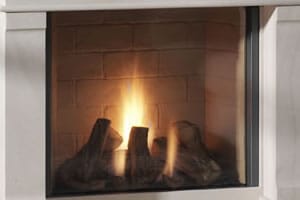
The vast majority of modern UK homes rely on mains gas.  Advances in condensing gas burner technology now allow appliances to achieve over 95% efficiency.  However, decorative open gas fires remain an exception; they operate at very low efficiency, consuming substantial volumes of gas while radiating minimal useful heat into the room.

For properties not connected to the national gas grid, Liquid Petroleum Gas (LPG) is a common alternative.  Stored in high-pressure cylinders or bulk garden tanks, LPG requires specialized injectors and burners.  Because LPG can cost up to twice as much as mains gas per kilowatt-hour (kWh), choosing high-efficiency appliances is critical.

Heating Oil

Heating oil is one of the most popular choices for rural, off-grid central heating systems.  Modern oil-fired boilers rival gas appliances with thermal efficiencies reaching 95%.  While oil is frequently the least expensive off-grid option, fuel prices fluctuate rapidly based on global market conditions.  Homeowners must monitor market trends to purchase oil during seasonal price dips, especially during cost of living crisis or wars that affect the cost of heating oil, as the cost of a full tank of oil can triple over night during these times.

Solid Mineral Fuel

Though less common as a primary heating source than in decades past, solid mineral fuels (such as anthracite and smokeless coal) have seen a resurgence via multi-fuel stoves.  Efficiency varies dramatically: an open fire may lose most of its heat up the chimney, whereas an enclosed multi-fuel stove can deliver up to 90% efficiency.  Solid fuel provides sustained, intense heat, making it economical for households where the heating operates continuously throughout the day.

Wood Burning and Wood Pellets

Wood is widely recognized as an environmentally sustainable fuel source.  During its growth cycle, a tree absorbs roughly the same volume of carbon dioxide that it releases when burned or left to decompose naturally on the forest floor.  Provided harvested trees are replaced through sustainable forestry, wood burning is considered carbon-neutral.

However, standard logs introduce practical considerations:

  • Drying Time: Green wood can take up to three years to season properly.
  • Storage Space: A substantial, dry log store is mandatory.
  • Refuelling Frequency: Logs require loading three to eight times more frequently than solid mineral fuel.

To overcome these friction points, wood pellet stoves utilize compressed sawdust pellets fed automatically via an electric hopper, allowing long burn times with automated ignition.

Electricity

While electric heaters are 100% efficient at the point of use within the room and require no chimney or flue, electricity remains one of the most expensive heating methods in the UK per unit of heat generated.

When evaluating grid electricity from fossil fuel generation, system-wide efficiency drops significantly: thermal power station generation operates at roughly 35%-45% efficiency, with a further 3%-5% lost during high-voltage transmission.  Furthermore, running costs per kWh for standard domestic electricity tariffs are substantially higher than gas, oil, or wood.

2.  Heating Appliance Head-to-Head: Radiators vs Open Fires vs Wood-Burning Stoves

To determine the most practical heating setup, we compared three prevalent systems across four critical criteria: Initial Outlay, Maintenance, Running Costs, and Heat Retention.

Heat Efficiency Comparison

  • Wood-Burning Stove - 80% Useful Heat Retained - 20% Lost
  • Central Heating Rads - 70% to 90% Useful Heat Retained - 10% to 30% Lost
  • Open Fireplace - 20% Useful heat - 80% Lost!

1.  Initial Outlay

  • Gas Central Heating Radiators: Installing or replacing a full central heating system (boiler plus pipework and radiators) in a typical three-bedroom semi-detached house costs approximately £6,000.
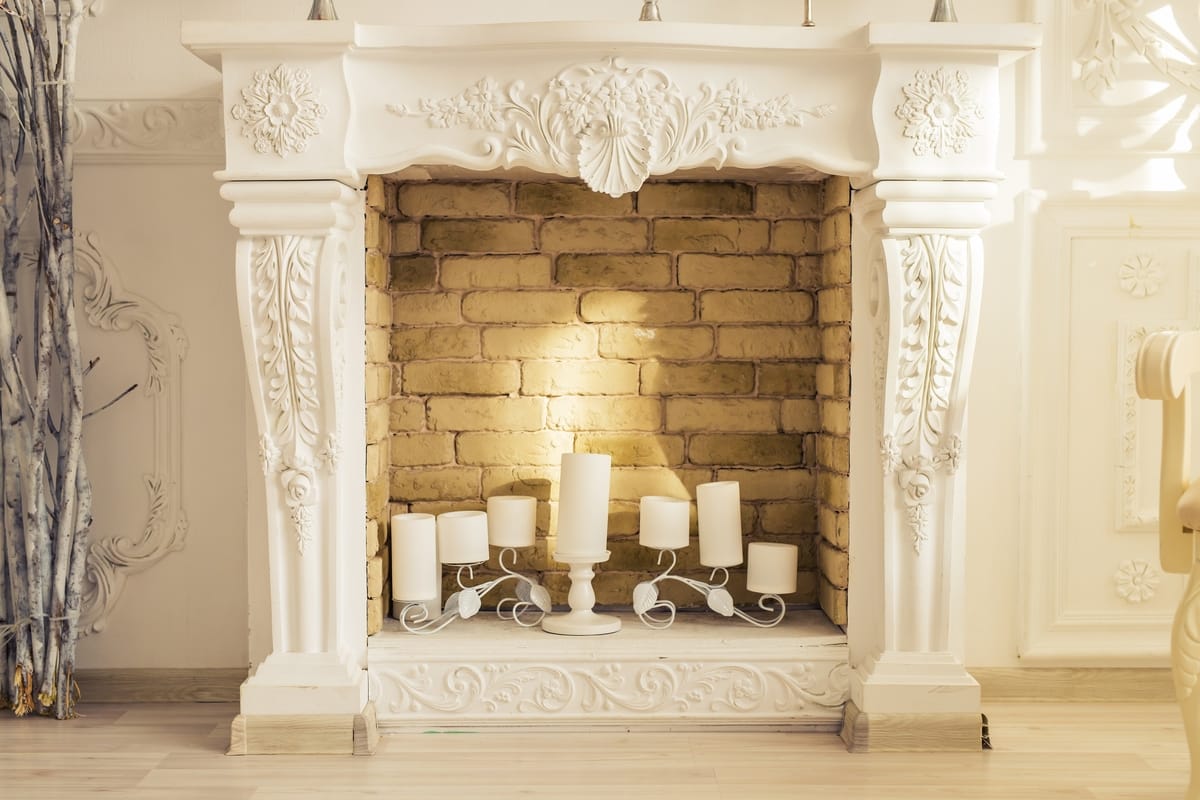
  • Open Fireplace: Opening up a sealed chimney breast, installing a flue liner, and fitting a quality reclaimed surround costs around £2,700 (£1,500 building work + £1,200 surround).
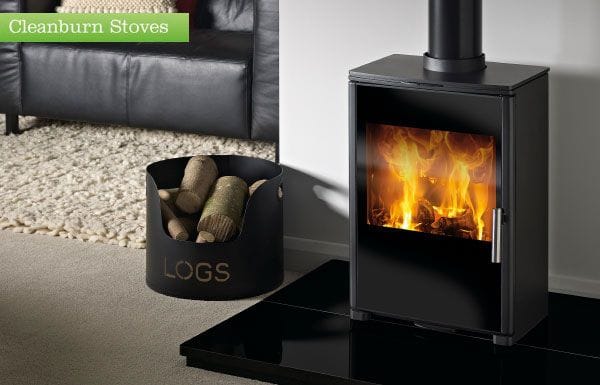
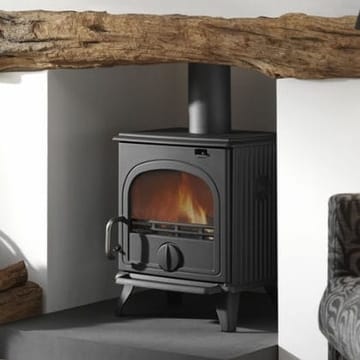
  • Wood-Burning Stove: A high-efficiency 5 kW stove costs between £600 and £700.  Installation with an existing functional chimney averages £450, rising to around £1,500 if a double-walled insulated stainless steel flue system is required.  Total: £1,050-£2,200.
  • Category Winner: Wood-Burning Stove

2.  Maintenance Requirements

  • Gas Radiators: Requires annual boiler servicing (£100/year) and a powerflush every 5 to 10 years (£400) to clear internal sludge and protect pipework.
  • Open Fireplace: Requires an annual visit from a certified chimney sweep (approx.  £70/year) to remove soot and creosote buildup.
  • Wood-Burning Stove: Simple ash clearance and log management.  Requires an annual stove service (approx.  £65/year) plus an annual chimney sweep (£60-£120/year).
  • Category Winner: Open Fireplace (Lowest total technical maintenance)

3.  Running Costs

  • Gas Radiators: Heating a standard three-bedroom property costs roughly £800 per year under average UK energy tariffs.
  • Open Fireplace: Burning seasoned wood continuously over a 5-hour evening period costs approximately £8.00 due to high fuel consumption.
  • Wood-Burning Stove: Burning seasoned wood in an enclosed stove for a 5-hour evening period costs roughly £2.34 (with opportunities to source free scrap timber for self-seasoning).
  • Category Winner: Wood-Burning Stove

4.  Heat Loss & Thermal Efficiency

  • Gas Radiators: Minimal direct chimney heat loss, but heat can bleed through external uninsulated walls behind radiators.
  • Open Fireplace: 80% of heat is lost directly up the chimney stack.  For every £100 spent on timber, only £20 stays inside the room.  Furthermore, an open chimney draws cold outdoor air into the dwelling via downdraughts.
  • Wood-Burning Stove: Only 20% of heat is lost up the flue.  80% of generated thermal energy radiates directly into the room.
  • Category Winner: Wood-Burning Stove

Overall Appliance Winner: Wood-Burning Stove

While the initial capital outlay is higher than a simple open hearth, high thermal efficiency and low fuel consumption ensure that a wood-burning stove pays for itself quickly while reducing your home's overall carbon footprint.

3.  Stove Purchase, Installation, and Fuel Financials

According to data from the Stove Industry Alliance (SIA), running a modern wood-burning stove is significantly cheaper per kilowatt-hour (kWh) than alternative domestic heating methods:

  • 77% cheaper per kWh than an electric fire.
  • 50% cheaper per kWh than an LPG fire.
  • 43% cheaper per kWh than oil heating.
  • 29% cheaper per kWh than a gas fire.

Stove Purchase and Installation Costs

The cost of purchasing a stove depends on heat output rating (kW), fuel type, and design features:

  • 5 kW Log Burner: £470 - £700 (Standard output for average UK living rooms)
  • 10 kW Log Burner: £800 - £1,400 (For large or open-plan spaces)
  • 5 kW Multi-Fuel Stove: £330 - £600
  • 10 kW Multi-Fuel Stove: £400 - £900
  • Boiler Stove (Integrated water jacket): £1,000 - £2,000
  • Wood Pellet Stove (Automated hopper): £1,000 - £4,000

The average professional installation cost in the UK is £1,500 (ranging from £750 to £2,000 depending on chimney lining needs, scaffolding access, and hearth preparation).

Understanding Firewood Quality & Energy Density

The moisture content of firewood directly dictates its heat output per kilogram:

Firewood Type > Moisture Content > Energry Output (kWh per kg) > Average UK Price

  • Freshly Cut Logs: 60% to 80% - 1.0kWh/kg - £80 per m2
  • Seasoned Logs: 40% - 3.0kWh/kg - £110 per m2
  • Kiln-Dried Logs: 20% - 4.5kWh/kg - £130 per m2
  • Wood Pellets: 10% - 4.8KWh/kg - £120 per 250kg

Note: Burning wet or freshly cut wood produces minimal heat, causes heavy soot deposits in the flue, and generates high particulate emissions.  Always burn dry wood with under 20% moisture.

4.  How to Calculate Your Home Heating Output & Payback Period

Before contacting a HETAS-registered installer, you can estimate your required stove heat output and projected fuel cost savings using the standard formulas below.

Step 1: Calculate Required Stove Wattage (kW)

To find the approximate stove rating required for a room:

Required Output (kW) = Room Height x Room Width x Room Length.  Then divide by 14

For example, a room measuring 5m x 4m x 2.5 m = 50m3.  Dividing 50 by 14 yields approximately 3.57 kW, indicating a standard 5 kW stove will comfortably heat the space.

Step 2: Estimate Annual Kilowatt-Hours (kWh)

Assuming a 5 kW stove operated for 32 hours per week across a 24-week UK winter season:

5kW x 32 hours/week x 24 weeks = 3,840 kWh per year

Step 3: Calculate Annual Log Volume and Fuel Cost

Using kiln-dried logs delivering 4.5 kWh/kg

Weight of Logs Required = 3,840 kWh divide 4.5 kWh/kg = 853.3 kg

Since 1 cubic metre m3 of stacked logs weighs approximately 500 kg:

Volume Required = 853.3 kg divide 500 kg/m3 = 1.71m3

At an average cost of £130 per m3 for kiln-dried timber:

1.71 m3 x £130 = £222.30 per year in fuel

Step 4: Compare Against Electricity or Gas

Heating that same space using electric space heaters at an average rate of 16p per kWh:

3,840 kWh x £0.16 = £614.40 per year

Annual Net Saving = £614.40 - £222.30 = £392.10 saved annually

Step 5: Calculate Capital Payback Period

If total supply and installation costs equal £2,000:

Payback Period = £2,000 divide £392.10/year = approx 5.1Years

5.  Environmental Realities and Regulatory Compliance

While wood burning offers financial relief during periods of high energy prices, environmental considerations must be managed responsibly:

  • Smoke Control Areas: Large portions of UK towns and cities are designated Smoke Control Areas under the Clean Air Act.  In these zones, you may only burn authorized smokeless fuels or use a DEFRA-exempt stove (EcoDesign compliant) certified to burn wood without emitting smoke.
  • Particulate Matter PM2.5: Burning damp wood or unapproved coal releases fine particulate matter into the atmosphere.  Installing a modern Ecodesign Ready stove reduces particulate emissions by up to 90% compared to an open fire and 80% compared to a 10-year-old stove.
  • Holistic Efficiency: Installing a stove should complement broader home insulation strategies.  Upgrades such as loft insulation, cavity wall insulation, and draught-proofing reduce overall heat demand, allowing smaller wattage stoves to maintain comfort while lowering fuel consumption further.

Conclusion: Which Fuel is Best for Your Home?

  • Choose Mains Gas if your property is connected to the grid and you prioritize automated, low-maintenance whole-house central heating.
  • Choose Heating Oil if you live in an off-grid rural property needing reliable whole-house central heating.
  • Choose a Wood-Burning or Multi-Fuel Stove if you want to lower winter heating bills, create an efficient focal point, achieve backup heating independence, and reduce reliance on grid electricity or fossil gas.

Before purchasing an appliance, arrange a site survey with a registered HETAS engineer or visit a certified fireplace showroom to ensure your chimney, flue, and room ventilation satisfy UK Building Regulations.

PB: IA: